Saturday, November 01, 2008

Teacher Tube

This is a great site for ideas to motivate your students. I have just found this lovely origami cat & broomstick. Sorry, it's a bit late for Halloween!

Not only can your students make their own cats but it may also provide the inspiration to explore the camera/video and something like movie maker to create their own 'how to' movies.

Tuesday, October 28, 2008

Marble Track
More great ideas from Lucknow - showing how one activity can be used in many different ways to extend student thinking.

In one class the students had been constructing a marble track using meter rules (with the 1cm groove down the middle), cardboard tubes and anything else they could lay their hands on! There had been lots of activity getting the pieces lined up and finding ways to get the marble to go round corners. Then they'd used the stopwatch to see how long the marble would take to travel from start to finish. The week we were visiting students were still experimenting with different set ups in the classroom but the concept had also moved out doors.

In the sandpit students were digging tracks in the sand for golf balls - adjusting the levels when the gradient was insufficient to get them to roll.


In another area students were using pieces of pvc pipe and long cardboard tubes to make a super sized marble track.


Monday, October 13, 2008

Ulearn 08 Conference

As always, Gay & I came away with renewed enthusiasm after the conference. It's great to gather new ideas and to hear of peoples success with Discovery Time. We get very excited when teachers tell us that "Yes, this is what our kids need."

We have had many enquiries about our book so here are a few more details.
This is the blurb on the back cover:

Discovery Time provides an exciting environment in which to strengthen the key competencies and bring fun into children's learning.
Discovery Time is an activity-based programme, held once a week. It's a fantastic opportunity for kids to explore and create.
Students say:
It's the best part of the whole week.
You learn to challenge yourself.
You get to do stuff that yo've never done before and you think you can't do it but you can.
Teachers say:
It puts balance back into the curriculum.
It puts kids in charge of their own learning.
It's a chance to stand back and really observe your students.
The possibilities are endless...


Read the book and you'll know:
  • Why Discovery Time is important for todays kids
  • How to plan, structure and organise the session
  • How to use Discovery Time to strengthen key competencies
  • How to use the reflection time at the end to maximise learning

There are also lots of ideas for activities, plus examples of completed planning sheets to get you started.

Don't forget to check out the CD Rom that goes with the book. This contains all the colour pictures that we couldn't put into the book, recipes and quotes from the research (A4 posters for displays).

email discoveryt@gmail.com and we can put a copy in the post and send an invoice $48 NZ (including postage & GST).

Lucknow School

What a treat to visit Havelock North and see what the junior and middle syndicates at Lucknow school are doing.

Here are a couple of their great ideas for activities (will post more later).

My favourite was this water wheel - a slice of potato with pieces of plastic slotted in around the edges. The kebab stick through the middle allows the whole thing to turn.

When one wheel failed the 'tap test' the teacher said she caught herself just in time. "It's very easy to leap in and provide a solution, rather than ask a question that gets students thinking and problem solving for themselves." Standing back and asking the right question is one of the greatest challenges for teachers during Discovery Time.

Also loved the group who were finding ways to siphon water from one container to another. Great teamwork and cooperation going on plus lots of excitement!

Tuesday, August 19, 2008

Fractions

The class had been studying fractions in maths, so we decided to include some activities that would strengthen their understanding and challenge the more capable.

First there was toast! The kids discovered there were lots of different ways to cut a slice in half and in quarters. Some tried eighths but it was a bit fiddly eating them!

We also had play dough! Working out how to cut something into quarters, eighths, sixteenths bought out lots of oral language and problem solving.

Some clever souls accepted the challenge and managed to work out how to cut a pizza into 64 equal pieces. Well, nearly equal!!!!!!

Then the group constucting things with Klikko noticed that you needed six triangles to make a circle and worked out that two sixths was the same as one third.

The class teacher and I sat back, watched, listened and asked questions.
How did you do that?
What did you find out?
What would happen if....?
What other fractions could you make?
Are all the pieces equal?
How can you make them equal?

We had lots of other activities going on at the same time but nearly everyone thought that making toast was the best. Bother! Why didn't I think to ask what fraction of the class...


Thursday, July 24, 2008

Animation
This a fabulous little film, done over the holidays by Noah. I thought it might inspire other budding film makers.

Hi everyone
Here is a movie I have made today. Hope you enjoy it.

Noah


Thanks very much for letting me use this Noah. Would you like to send us a comment telling everyone how you did it and what software you used.

Just hit the comment button below.

Thanks again

Brenda

Saturday, July 19, 2008

Basic Equipment for Discovery Time
I have just had a request from Angi for some ideas for equipment - especially for role play, so here goes.

We always look for things that are open ended, that children can use over and over again in different ways.

We try and buy quality, things that will last! This may cost more initially but is worth it in the long run. Along side this is the need to teach children how to look after equipment; to keep track of the little pieces and not leave things where they can be trodden on (especially lids of boxes etc).

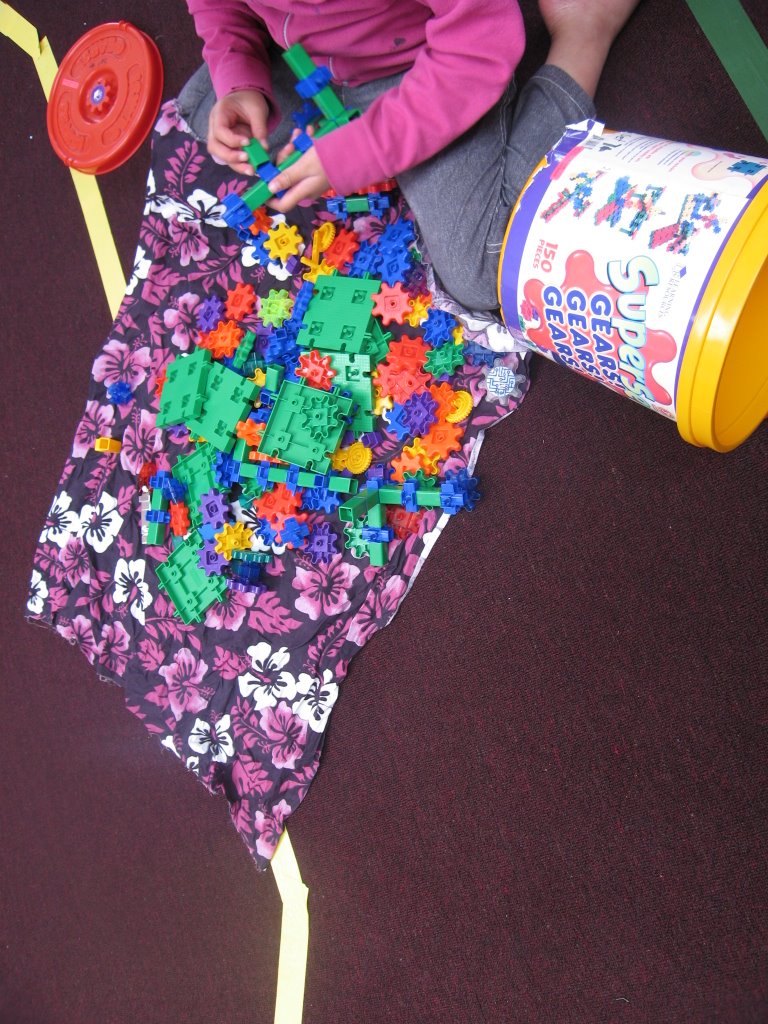
We also purchase plastic boxes to keep things in - especially large flat ones that the children can work from rather than tip the contents out. The 'underbed' storage boxes work especially well for LEGO.

Specific items:
Tea sets - especially ones that go beyond cups saucers and teapots! children get much more inventive when they have pots and pans, plates, cutlery and food items. Watch out for ones that include food from other countries.

Cash register

Puppets

Train sets - with lots of track

Construction sets - LEGO, Knex, Gears Gears Gears

Dress up clothes - I've found a teacher this year who has made her own and they are brilliant. Very simple designs but in a range of fabrics that seem to give kids lots of ideas for drama. I will take some photos when I get back to school to give more ideas as they really work well.

I've also been thinking recently that a collection of old sheets would work well for building huts etc.

Farm sets
Zoo sets

Building blocks - large & small

Dolls - see the groovy girls in an earlier blog


Hope this helps to get people started. If anyone has ideas to share please add a comment or send some photos.


Saturday, June 28, 2008

Tuesday, June 24, 2008

Teacher Reflections
Every now and then I record what teachers have to say about Discovery Time
This one is from Andrew - now on his OE (if you are reading this in the UK Andrew add a comment. We'd be very happy to do a work shop over there!!!!)

Discovery Time is really good for my enjoyment of teaching. I get to see the kids in a more relaxed environment and can just have fun instead of having to really get on top of them to do their work. In Discovery Time they just go for it.

It’s also a time for the children to knowingly reflect on their learning, to talk about what they did and link it back to the original key competency focus. The kids are now saying, I know I cooperated and shared because I did .....during discovery. They can give real examples of how they used the skill.

Sunday, June 08, 2008

Giant bubbles


Aren't these fantastic!

Just imagine the fun your class could have and the questions that would be generated.

Can we make a stronger mixture?
Does it still work on a windy day?
Can you make other bubbles inside the big one?
Why does humidity make a difference?


The friend who sent the photos said..

"It was only 70% humidity, higher humidity gives better bubbles - we had trouble closing off the bubbles that day, without them popping."

Here is a link to the bubble book, and 'bubble thing', that we have - it's an ad for it on Amazon, and you can look at some of the inside pages. Might be useful. . . . http://www.amazon.com/Unbelievable-Bubble-Book-John-Cassidy/dp/0932592155/ref=pd_bbs_sr_1?ie=UTF8&s=books&qid=1203286949&sr=8-1
If anyone else has ideas or photos of things they have tried please send us an email discoveryt@gmail.com and I'll put them up (just make sure you have permission for children's photos). We're always looking for new material so would love to hear from you.

Friday, May 02, 2008

Groovy Girls (and boys!!!!)

Lots of people asked about these dolls at the Mana workshop in the holidays. They used to be available from Toyworld and you might still pick them up there but I have been in touch with Children's Bookshop in Auckland who has them. It is useful to go on to Amazon and look at the different types of dolls so that you can choose a range. They have boys and girls, plus various ethnicities. The kids love them. See photos on blog entry for October 30th 2006.

Thursday, April 10, 2008

Zoo animals


Don't you love these wonderful zebras.


The glue gun got plenty of use and worked brilliantly.


Lots of good learning about how hot the glue can get!!!!!


Just two more legs and we're done!

Monday, April 07, 2008

The Discovery Time book has been written for teachers who want to implement the programme in their classes.

It has:
A strong focus on key competencies
Details of how to get started and how to continue to develop Discovery Time in your class
Examples of completed planning sheets
A CD Rom with:
– A power point of activity ideas
- Recipes for use in the classroom
- Relevant quotations (A4 posters for display purposes)
- A planning sheet with write able fields

We are very excited about the programme and the number of schools that are now using Discovery Time in their classrooms.

This year we will be presenting Discovery Time at educational conferences and at workshops run through Mana Education Centre. We are also available for presentations at schools and early childhood centres.
While the programme is designed to run in primary schools the concepts and focus on the key competencies is hugely relevant to early Childhood.

To order our book & CD please email
discoveryt@gmail.com

Cost $48 NZ (incl GST and postage within New Zealand)

Tuesday, April 01, 2008


The first 50 copies of the book arrived today!

Great excitement!
We think it looks fabulous!

Wednesday, March 26, 2008

Workshops on Discovery Time

Just to let those in the Greater Wellington region know that Gay & I have two Discovery Time workshops with Mana Ed over the holidays.

23rd April 9.00-12.00 Masterton
24th April 9.00-12.00 Porirua

Contact courses@manaeducationcentre.org.nz
Tel 04 237 7318

This is a fun high energy session that will introduce you to Discovery Time.
It will cover:
  • The philosophy and research
  • How to get started
  • Focussing on the key competencies
  • Practical ideas and activities

Saturday, March 22, 2008

Book News

Copies should be here by the end of April! Yeah!

So watch this space for news of the release.

It seems to have been a very long process but we are really pleased with the result.

We have had a fabulous team working alongside us:
Joy Allcock our mentor
Margaret Cahill our editor
Stephanie Drew our graphic designer

We wouldn't have got there without them.

We have learned so much along the way. We now know what an 'ozalid' and a 'white dummy' look like and can navigate our way through import and shipping forms!

We'll keep you posted.

Tuesday, March 04, 2008

Interesting article from the UK

Primary schools 'have got worse'

Latest findings from the Cambridge-based Primary review (Dominic Wyse, Elaine McCreery and Harry Torrance) indicate that:

"A narrowing of the curriculum has led to a decrease in the quality of English primary schooling, 'High stakes' testing of pupils has led to a system 'focused on literacy and numeracy at the expense of the broader curriculum'".


"While test scores have risen since the mid 1990s, this has been achieved at the expense of children's entitlement to a broad and balanced curriculum."

"Creativity is at risk of being squeezed out of our classrooms" says the Liberal Democrats spokesperson for education.


Food for thought!!!!
Are we in danger of heading down the same path in New Zealand?
Will the new curriculum help to redress this problem?
Is this an issue for education in other countries?
What happens if we stifle creativity?


Let us know what you think?

Monday, March 03, 2008

Foster creativity!

The Arts Festival is in full swing in Wellington - always a great source of inspiration.

Went to the Dowse Gallery in Lower Hutt yesterday. They have an exhibition - 'A Costura Do Invisivel' showcasing Brazilian fashion designer Jum Nakao's wonderful creations made from paper.

Alongside the exhibition was an activity table where students could create their own paper garments for cut out dolls. These were some of the creations.


I can see some of our budding designers being interested in this - perhaps show them the Nakao website (above) for inspiration.

Also look at the peg dolls / worry dolls on an earlier blog (July 16 2006 - click on 'blog archive' on the right of this page, then click on the arrow next to 2006, Then on arrow by July)

Have fun creating.

Wednesday, February 27, 2008

What is Discovery Time?

Thought it might be time to go back to the beginning and look at what Discovery Time is all about.

Discovery Time is a ninety minute, hands-on, activity-based programme where students can be in control of their own learning. Activities come from any area of the curriculum (art, drama, PE, music, technology, literacy, numeracy) - whatever will inspire and catch the students interest. In addition there is a strong focus on strengthening key competencies (thinking, using language, symbols and text, managing self, relating to others, participating and contributing).

Some of you may be familiar with the Developmental or Choosing Time programmes that were popular in the 70s and 80s. Yes, this is similar, but with more focus and planning.

The teacher begins by introducing the focus for the day, which targets a specific aspect of one of the key competencies. There might be discussion about why it was chosen, what it would look like and sound like, and how one would know if it were happening. Examples might be: asking to join in, sharing, taking turns, persisting when things get difficult, solving problems that occur, trying out new ideas...

The various activities for the day would be explained with many of these linking to current curriculum work.

The children then select and participate in the activities. During the session the teacher takes the role of facilitator: observing, providing feedback, asking questions and encouraging students.
At the end of the session the class would come together to share and reflect on what they had done and what they had learned.

The programme is based on three key principles:

Students need opportunities not only for cognitive development, but also
for social-emotional and physical development.

Students’ learning is enhanced when there are opportunities for 'hands on'
experiential learning.

Student motivation is increased when they are in control of their own learning.

The programme was initially designed to meet the needs of students who found the structured, academic focus of classrooms a challenge. It soon became apparent that there were benefits for all students and for teachers as well. Students get a chance to take control of their own learning, they are motivated, fully engaged and there are few behaviour difficulties.

Best of all, it is fun!

Thursday, February 07, 2008

Start of a new school year and back into action. Sorry for our lack of communication since November.

Many people have been asking about our book.... Yes it is coming, just one or two hitches!!! We have been working very hard over the holidays and it is just about there. Very exciting to see it come to life with the skill of the designer.

If you want to get in touch email us at discoveryt@gmail.com
More soon, hope your year is off to a good start and that lots of you are thinking about including Discovery Time in your timetables.

Thursday, November 15, 2007

Garden Design

At Porirua East School each class is involved in designing and creating a class garden. There has been a lot of activity, much of it during Discovery Time, with students raising seeds, digging hard clay soil, adding mulch and fertilizer, planting and watering.

Today some moved on to more decorative features. The woodwork bench was out and several bird tables were being created. Year three students showed amazing skill.

"We've had the woodwork bench quite a few times this term, so they're getting pretty good," said their teacher.


The finished product!

There's a hook under the arm to hang the food from.
Great design, well done Sohaib :-)


Sunday, November 11, 2007

Anyone for sushi?

The class were finding out about rice - How it grows, where it grows etc. We thought we should include some 'rice' activities in Discovery Time.


We started with fried rice, using the electric frypan in the classroom - a great success, so then thought we could move on to sushi... A bit ambitious as none of us had made sushi before!
(purchased a sushi kit at the supermarket - with full instructions).


But hey! great success! A wonderful activity with great opportunities for oral language.

  • Describing the smell of the nori
  • Cutting 'thin' rather than 'thick' pieces of cucumber
  • Dividing the sushi rolls in 'half' then 'half' again
  • Finding words to describe the wasabi - those that were game enough to taste it!
We also had fun practising with chopsticks!


Best of all, by working in small groups of four, everyone who wanted to make sushi could and there was enough for everyone to have a taste.

Thursday, November 08, 2007

Using ICT in Discovery Time

At Russell school year 4, 5 & 6 students had been making juggling balls and learning how to juggle. Katarina, became something of an expert at making the balls, so decided to go one step further. She took a sequence of photos to show how to make them. We then worked together to put them into 'movie maker' and presented it to the class. It took two sessions to complete but the result was great - a real example of persistence.

'Movie maker' is part of the Microsoft package, so is on most school computers. It's easy for students to drag photos in and add transitions to link each picture.

Our key learning point ....
Only take photos in landscape not portrait if you are putting them into movie maker!!!!!

Sunday, October 07, 2007

Starters & Strategies - term 3 2007

It has taken me a little while to catch up with this one but as always it is worth a read. Best ideas for Discovery Time:

  • Using our gardens for play - suggests (among other things) building a bean teepee, making a bird feeder, a worm bin or just leaving a space of bare ground as a digging and general engineering area. Check out the Yates website.

  • Funky Eye Friday - let imaginations run wild creating, crazy, groovy and innovative eyewear. This was in conjunction with Royal NZ Foundation of the Blind - the actual date has past but hey it's a great idea.

  • BP Challenge - some information about the 2008 zoo challenge - creating an enrichment toy.

Monday, September 17, 2007

What's the Hurry?
Reclaiming childhood in an overscheduled world
A guide for parents, teachers and the community.
by Kathy Walker


Has anyone read this book?
In an intro to the book she writes

"Childhood is a time that is precious and wonderful for young children. However, increasingly, the valuing of childhood as a unique period within the lifespan, a time for exploration, investigation, playing and becoming used to life, is something at risk of becoming lost."

Chapter one is available on line and is worth a read.
It has some interesting snippets:

"We don't have time to let them play, or to have much free time, we have such a crowded pushed down curriculum. It's a lot more stressful on kids and us these days."

"Many teachers frequently comment that some children have no 'down time' any more. These children are so busy doing; they have less and less time for being a child."

"Children are no longer actually initiating their own creative play. The language of children is increasingly... "Show me how to do this, what do I have to do next?"


She finishes the chapter with six key messages about childhood - have a read... very closely aligned to our Discovery Time philosophy

Wednesday, August 29, 2007

Flax weaving at Russell School

We have just started Discovery Time in a year 5 & 6 class at Russell School with a
key competency focus on co-operation.

Today some students experimented with harekeke weaving helping each other interpret the instructions and create these great fish.


Easy to follow instructions in the School Journal, Part 3 no. 2 1988
Mahi Harakeke by Jossie Kaa


Monday, August 20, 2007

'Junk' - A real favourite

Sometimes it's the simple things that are the best.

The amount of talking, co-operating and problem solving that goes into making these junk creations is amazing.

The kids are always ready to explain what all the different bits and pieces are and how they work.

Ask a few more questions and they'll tell you what they were thinking about as they designed their creations, the problems they had and how they solved them, and what they are planning to do next.

Here are some of the results from last Friday's Discovery Time session in Room 10 Porirua East School.


Thursday, August 09, 2007

Workshop in Palmerston North

A big thank you to the Principals, teachers, RTLBs and GSE staff from the Hokowhitu cluster of schools for making us so welcome.

The enthusiasm that people show for the concept of Discovery Time always gives us a real buzz.

Look forward to hearing back on how things are going.

The daffodils and irises we received (now brightening my living room) will be great for observational drawing in tomorrow's Discovery Time!

Friday, July 27, 2007

"You cannot teach a man anything; you can only help him discover it in himself." ~~ Galileo (1564 - 1642)

Friday, July 20, 2007

Developing persistent learners

I received an email from Karen Boyes http://www.spectrumeducation.com/ a few weeks ago that fitted perfectly with developing the Key Competencies. The Key Competencies have become a major focus of the Discovery Time programme so I thought you might be interested in some of the things she has to say.

"Persistence is the ability to stick to a task especially when the going gets tough. it is being able to hang in there and keep going when a task becomes challenging, never giving up and keeping going."

"Give your students a repertoire of problem solving strategies. Invite students to make a plan before solving a problem and if plan A does not work use plan B, C, D or E."

"As a teacher you may hear yourself saying, "who has another way to solve this?" or "What's another way?" Develop a bank of different strategies and ways to approach a task."

"A great activity to introduce persistence is to teach yor students to juggle."
(see blog entry 29.05.07)

Art Costa says "teaching persistence is a matter of teaching strategy. persistence does not just mean working to get it right. Persistence means knowing that getting stuck is a cue to 'try something else.'"


Persistence is one aspect of the 'managing self' key competency, but also overlaps with 'thinking' when students are encouraged to problem solve a difficulty and try another strategy.

Talk about persistence at the start of a Discovery Time session and then having students reflect on how they persisted with a task, at the end of the session. This works brilliantly.


Wednesday, June 06, 2007

Learning Enrichment Centre (LEC)
At Windley school, the wonderful Jacki and her two cohorts run a Discovery session three mornings a week from 9.00 - 12.30 (Monday year 5-6, Tuesday year 7-8 and Wednesday year 3-4). She also writes a weekly newsletter to keep the classroom teachers in touch with what is happening.

Last week the Key Competencies selected were:

Thinking - making connections
Managing Self - being organised, making own plans and choices
Relating to others - including others

The theme - The Moon

Ambitious aren't they!!!!!

The following is an excerpt from last weeks newsletter (names of students have been changed)


"Continuing on the celestial theme we focussed on the moon. There are a huge amount of resources and endless possibilities - hmmmm, maybe not a field trip this time... It was surely a recipe for success with astronauts, spacecraft and space. Well, that is what we thought - but unfortunately we had a pretty disastrous session on the Monday with the year 5-6 group. There was a point where Michelle and I looked at each other in despair across the whirlwind that the LEC had become. Yes we had no control, but the children were all engaged. Technically that should have been OK, after all that is sort of the general idea, but there was a rising sense of tension in both of us and the children were picking up on it! Back to the drawing board for session 2 and we tightened up the programme a lot... "

Oh yes, we all have those moments!

"...One of our successes was Thomas, who really embraced the theme and created a fantastic moonscape complete with rocket that actually blasted off (with the aid of a pulley). It was great to see him with his old spark.

Another joy is Malo, who is very focussed and enthusiastic about everything! He is so keen to be independent of a teacher instead carefully watching the other children to figure out how to do things. He is a great risk taker and in this environment he is in his element.

Tama is a mix of a challenge and a delight. He turns up each morning at 8am and will work on something and actually get good results, however when the bell rings and the rest of the group arrive, he loses the plot. He does make great connections in his learning though (while pretending that he isn't really listening!) We were discussing the fact that the moon is an orb and he yells out (not the shy and retiring type), "like the orb web, cos that's round as well" YES! That was connecting learning he had from week 2 this term. And that's what keeps us here - 'cos sometimes across the mess, amidst the paint and the glue, and through the noise, there are glimmers of brilliance. which makes you realise what a lot of dirt you have to sift through to find the gold. BUT - We are sure that it is there somewhere."

Next week - VOLCANOES (We are in the mood for some explosive action).

Many thanks Jacki

Tuesday, May 29, 2007

Marble tracks and juggling balls

We started by exploring some of the commercial marble tracks that were available. Soon the students moved on to creating their own tracks out of cardboard. They attached them to the wall with pins and spent ages testing and modifying to get the best results.


Along the way one of the girls started juggling with a couple of marbles and that led to making juggling balls the following week.
Filled with rice, each ball needs three balloons to make them colourful and strong. Some of the challenges ...
How to get the rice into the first balloon
How to get the balls the same size
How to avoid spreading rice from one end of the class to the other!!!!
The biggest challenge though is learning to juggle!
For New Zealand readers the instructions for these are in the School Journal part 3, no. 2, 1997


More carrot cars
In subsequent weeks the students continued experimenting - adding drivers, finding better ways of attaching wheels and then moving into designing other vehicles like this motor bike.


Tuesday, May 08, 2007

Ideas from classrooms


Fabulous carrot cars from Brandon Intermediate - designed, constructed and tested to see which would travel the furtherest.


Monday, March 19, 2007

Great website for Discovery Time activities

http://www.enchantedlearning.com/crafts/

If you are working on a particular topic and need some inspiration head for this site! It has a wide range of activities with a very well organised index system that allows you to find what's available very quickly. The instructions are easy to follow with good diagrams. Just print them off!
Andrew's class at Porirua East School made some neat origami butterflies from this site last week. There are several examples that are great for getting students started with simple folding techniques.


Monday, March 05, 2007

Observational Drawing
In many of the classes that I go into the children do 'observational drawings'. An object is placed on the desk in front of them and they carefully draw what they see. Younger children may need some questions to get them started -
"Which way round do you think you should have your paper - landscape or portrait?"
"Where do you think you might start?"
"What shape can you see there?"

Older students, once they have the outline become very adept at noticing light and shade and with a little guidance can begin to shade effectively. Again the questioning guides the process -
"Which direction is the light coming from?"
"Where is the shadow falling?"
"Does it help to hold your pencil a different way?"

Children become quite obsorbed in the process and frequently surprise themselves with the results.


Wednesday, February 21, 2007

Bubbles - Hands on Challenges
Great activities from Barbara Duckworth and Jill Mitchell (Wild daisies).

What makes the best bubbles?
Experiment with detergent, shampoo, bubble bath and liquid soap.
Present your findings on a chart.


How strong are bubbles?
Blow through a straw into a glass that contains some bubble mixture.
Carefully pull out the straw.
Now put the straw back into the glass without breaking the bubbles.

What objects can you poke into the bubbles without breaking them?
Share your findings with the class.


What would happen if all the bubbles made didn't burst? (A 'hot' question - see entry 27.04.06)


Blow through a straw into a glass with a strong bubble mixture.
Can you blow bubbles so that they flow out of the glass and onto a plate?
Who can fill the plate?


Can you make a bubble picture?
Mix 1 teaspoon of food colouring and detergent with some water.
Blow through the straw to make bubbles
Place paper over the bubbles to make a print.
Experiment with other colours.
Display your print.

Monday, February 19, 2007

Welcome to a new year of Discovery Time.

Congratulations to Brandon Intermediate who has the first year 7 & 8 class doing Discovery Time! They started last week and the students loved it.

I was up there this morning and the focus for the day was 'reflection' - to be able to report back at the end on: what they had done, what they had learned and what they might do differently next time. They were also asked to challenge themsleves by trying something new.

These themes (which link closely to the Key Competencies in the draft curriculum) were made explicit to the students at the start of the session and were the basis for discussion at the end.

They had a great range of activities and the students were totally engaged throughout.
A great start.

Thursday, December 14, 2006


BP Challenge for Christmas

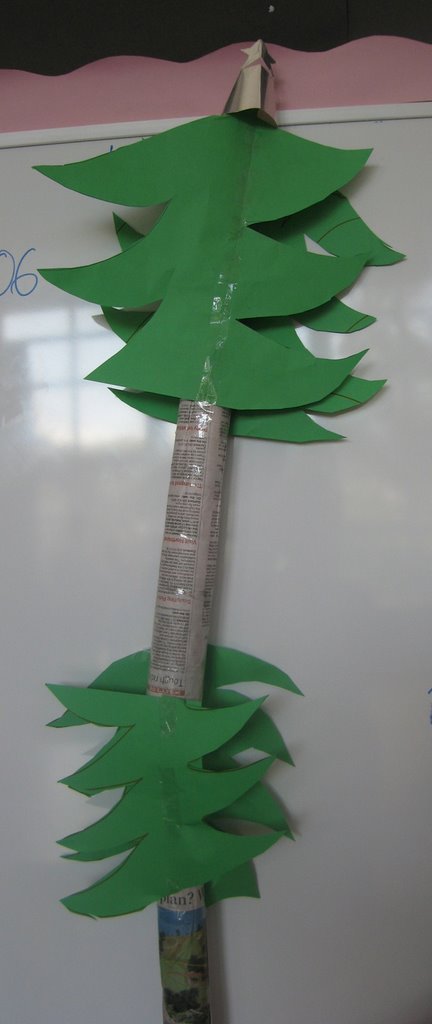
I had the last Discovery Time with year six students at Porirua East School today. Some of them had a go at the Christmas Tree BP challenge.

They had to make the tallest possible, free standing christmas tree.
Twenty five sheets of newspaper, many sheets of coloured paper and vast quantities of sellotape later ...... these were the results.


Monday, November 27, 2006

Christmas gifts
A glossy magazine fell out of the morning paper today... 'The Complete Christmas Catalogue' full of goodies to buy.

On the page 'keep the kids happy'... between the robot and the nintendo was a picture of a stick!
and the following

What: A stick
Where: Beaches, forests, river banks, some backyards and farms
Price: $0
Why it's fun: Can be used for hitting balls, teasing dogs, tracing patterns in sand, an aid for pirate adventures, pushing into cow pats and chasing younger siblings and parents with.

How refreshing

Sunday, November 19, 2006

Activities for Year 5 & 6 students

The BP Challenge website provides problem solving activities for groups of students. These are fabulous for Senior Discovery Time.

Just print the page of instuctions from the website and you are ready to go.

Last week we challenged the kids to make 'The Longest Bridge' (out of newspaper!)

The task
To build a model bridge which must sit on the back of two chairs facing outwards. The bridge must be as long as possible but strong enough to support a 500g weight.

Materials
15 full sheets of newspaper
2m sellotape
3m string
2 sheet A4 card
Scissors (for construction only)

It goes on to give conditions and judging criteria

Ready made activities just waiting to be used. Try them out they are great.

Wednesday, November 15, 2006

Equipment

Just a few ideas for looking after equipment

Strengthen all the corners of boxes (jigsaws, games, construction sets) with clear heavy duty tape so that the boxes are more robust.

Use Discovery Time to teach students how to look after things. Insist that when lids are removed they are placed under the box for safe keeping and that pieces are not spread all over the room.

Keep large pieces of fabric (1-2 metres is good) for the students to spread out on the floor when using construction material (LEGO etc). This defines the area and keeps all the pieces together. When packing up it is easy to gather up the corners and collect all the bits at once.

Monday, October 30, 2006

Photography and movie making

Discovery Time provides the perfect opportunity for a small enthusiastic group to:


  • capture the action happening in the class
  • experiment and explore possibilities for themselves
  • get teacher guidance if needed
  • be creative

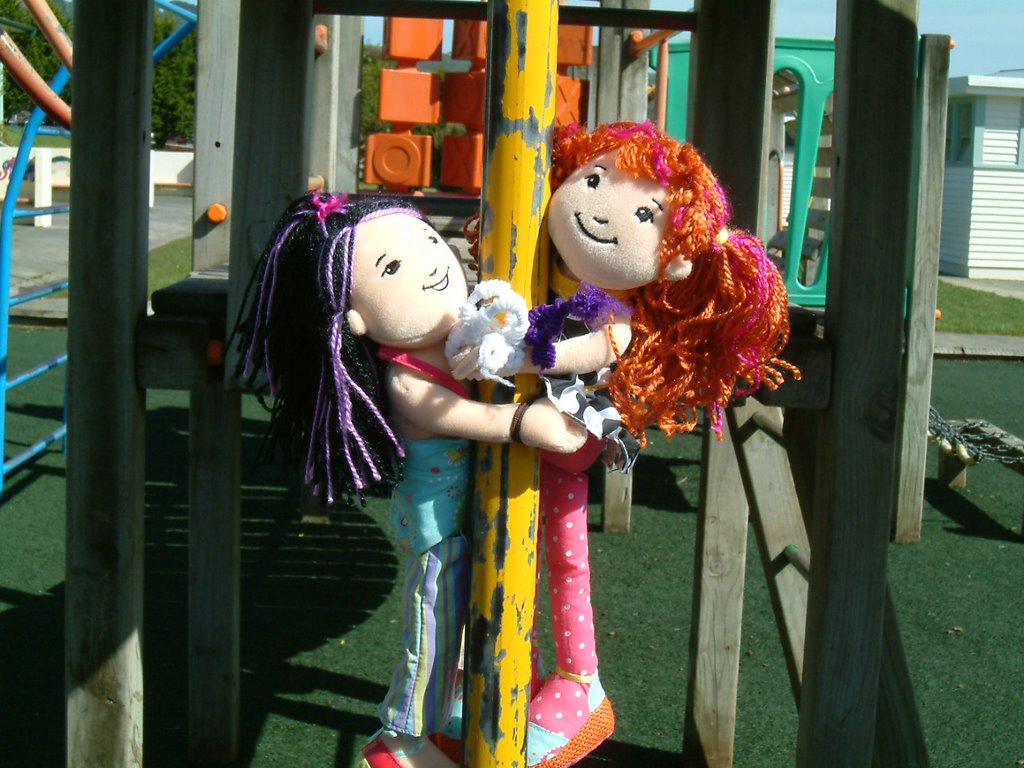
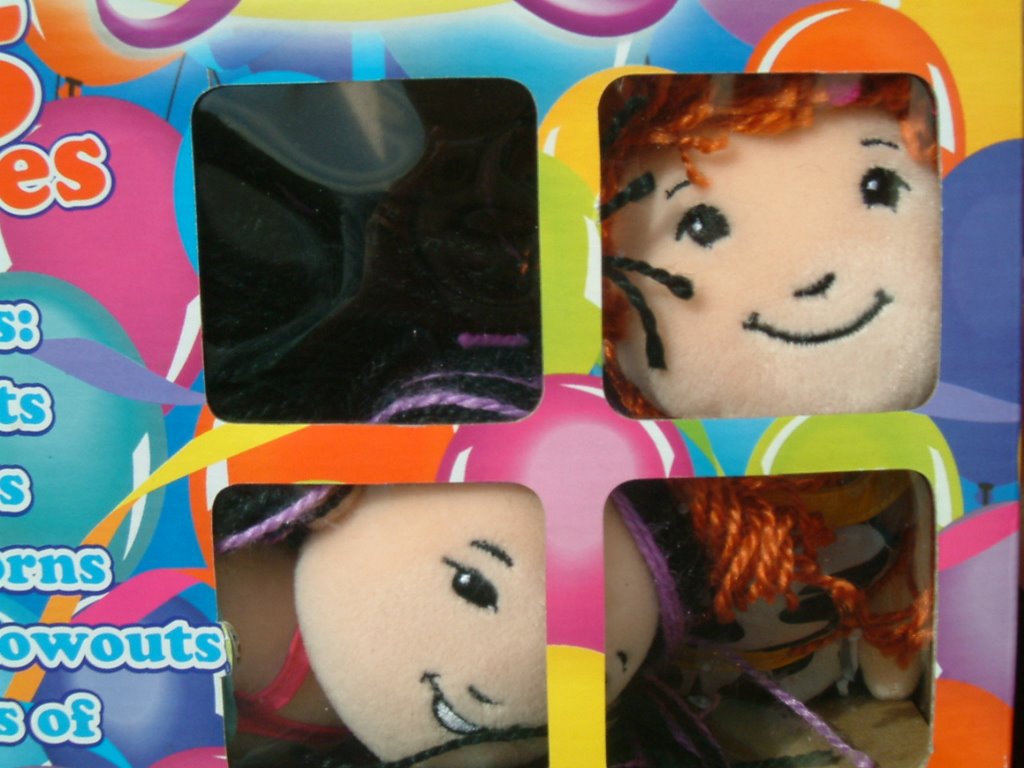
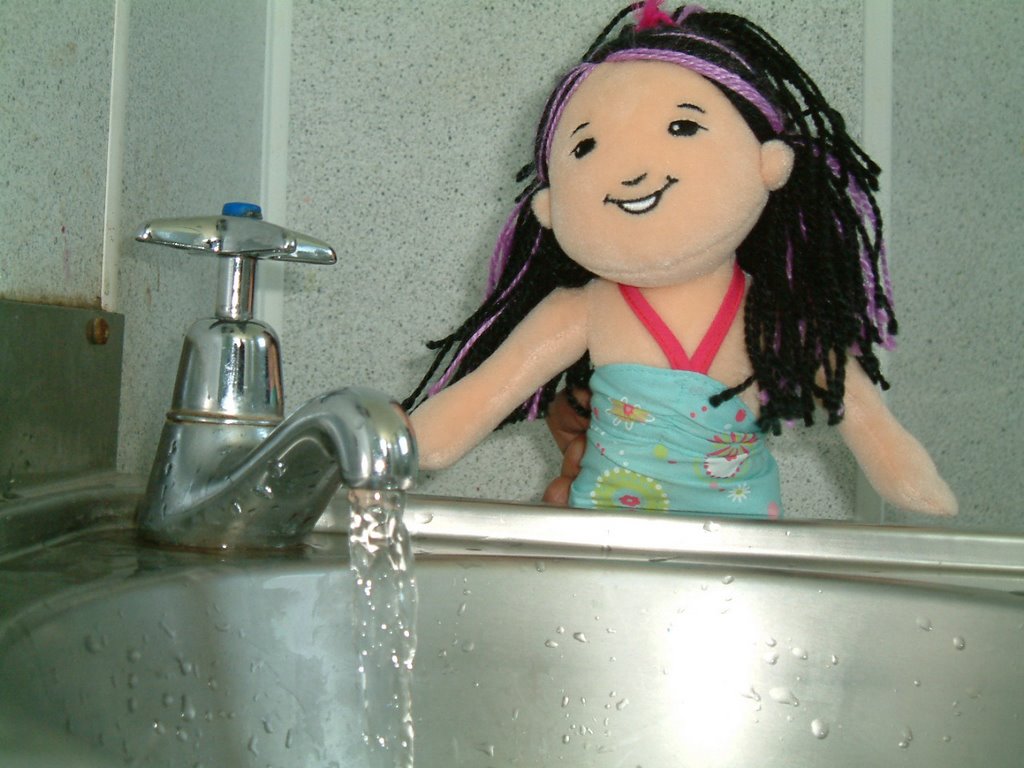
In a year 6 class last week a group became enthusiastic about a collection of dolls I had bought. We let them lose with the digital camera and these are some of the photos they came up with.

They now plan to use the movie maker software to put the still pictures into a digital story.


Movie Maker is on windows XP. Go into 'start' / 'all programmes'. If you can't see it there (the icon is a film reel) then look under 'accessories'. Right click on it and select 'send to desk top'. The icon will then appear on the desktop so that students can find it easily.

The programme is very user friendly and with minimal guidance your techno savvy juniors will soon master it. Older students should just about be able to work it out for themselves.

Tuesday, October 17, 2006

Modern life leads to more depression among children
In a letter to The Daily Telegraph, 110 teachers, psychologists, children's authors and other experts express their concern at the rising incidence of childhood depression and children's behavioural and developmental conditions.

They write that children... " still need what developing human beings have always needed, including real food (as opposed to processed "junk"), real play (as opposed to sedentary, screen-based entertainment), first-hand experience of the world they live in and regular interaction with real-life significant adults in there lives.

They also need time. In a fast-moving hypercompetitive culture, today's children are expected to cope with an ever-earlier start to formal schoolwork and an overly academic test-driven primary curriculum."

In response the Daily Telegraph has launched a campaign, Hold on to Childhood. Letters and emails of support have poured in.

Check out the website above for the letter in full.

Friday, September 29, 2006

Just back from the Ulearn conference. What a lot of thought provoking ideas and new challenges for us all. Gay & I will be focussing on getting schools in our area (who are not on ICT contracts), to make even greater use of technology during Discovery Time. We've come back really fired up so watch this space...we'll report back on how we're getting on (or ask for your help when we run into problems!)

Thank you to all those who came to our workshop - your enthusiastic response was fantastic. We hope there are lots of DT sessions starting up next term. We'd love to hear about them so leave a comment on the site.

I'm trying to remember the things we said we would put on the blog....

Firstly - Information on key competencies. I recommended a background paper by Rosemary Hipkins. This is a lengthy document (85 pages) but worth reading if you are leading your school in professional development on key competencies.

Secondly - We remembered after the workshop that we hadn't mentioned linking the session to your writing programme. We get some wonderful writing from children following the Discovery Time sessions. They always have plenty to write about and make some really insightful and reflective comments about their learning.

Thirdly - We also thought we should say that if your whole syndicate is going to do DT avoid the temptation to have the students move between rooms (unless you spend most of your time in a true team teaching situation). Feedback from teachers and our own experience lead us to believe that this time is invaluable for observing and interacting with your students. This is a time to strengthen your relationship with, and increase your understanding of every child in your class. For this to happen you need to have them with you.

I'll post again in the next few days
Have a relaxing holiday

Saturday, September 23, 2006

Ulearn06 conference starts next week in Christchurch

For those of you attending our workshop here are some useful references.

Are We Fixing the Wrong Things?
Yong Zhao, (2006). Educational Leadership. vol 63. no 8. p28-31.

Children are less able than they used to be.
The Guardian Jan 24, 2006

Moving up the Grades: Relationship between Preschool Model and Later School Success
Marcon, R.A. (2002) Early Childhood Research & Practice. spring 2002. vol 4, no.1

Three Rs to make room for life skills
The Age. March 30, 2004

Hurry! Hurried! Hurrumph!
NSW Dept. of Education
Education Horizons Vol 8. no 5, 2005.


If you have trouble locating any of these, contact me and I'll be happy to send them.

Thursday, September 21, 2006

An Evaluation of the Discovery Time Programme
Last year Rebecca Fisher, an Educational Psychologist with Group Special Education in Porirua, completed a research project on Discovery Time in one of the Porirua East School.
An article on this project has just been published in Kairaranga - volume 7, issue 2: 2006

The article describes the Discovery Time programme, a largely child-directed developmental programme, and discusses it in relation to the sociocultural approach to learning. It considers the effects of the programme on the development of children's oral language learning and cooperative social skills in a year 1 classroom.

Monday, September 04, 2006

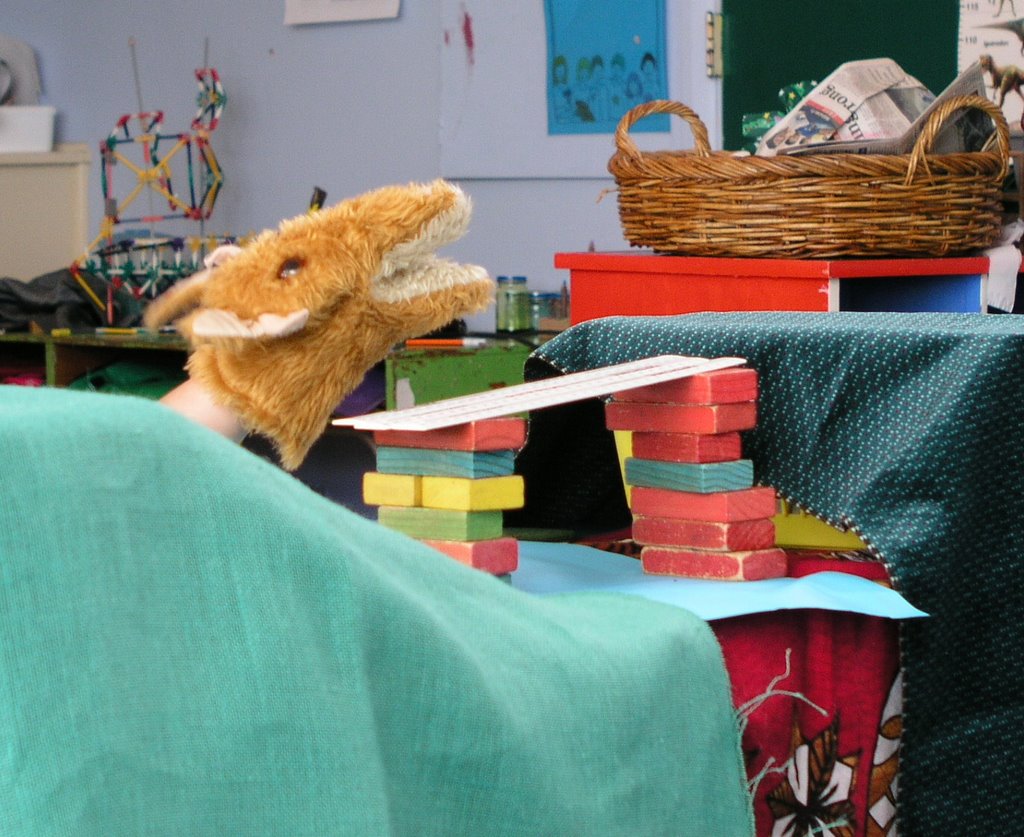
Masks and puppet shows are always popular and a great way to stimulate oral language.


Big Billy Goat Gruff


The fox - in a new version of the Gingerbread Man!
Saturday, August 26, 2006

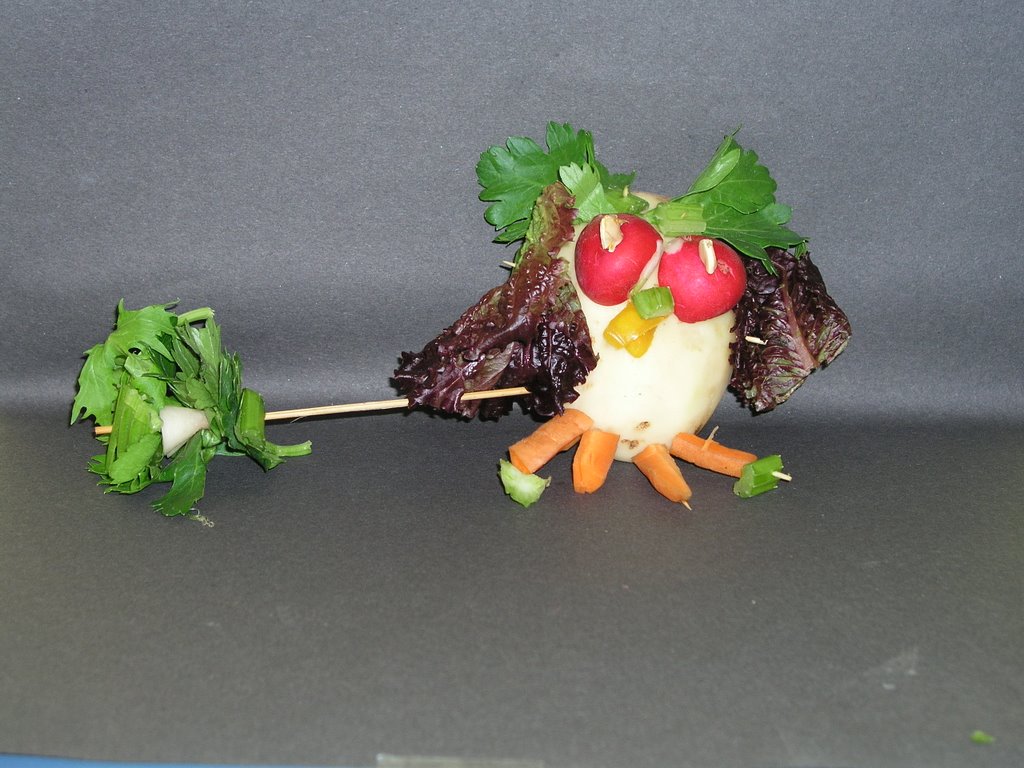
Vegetable Animals
Don't you love this wonderful owl made by a year 3 student

Tuesday, August 08, 2006

Making horrible hands!!!
Sounds like fun...
NZ School Journal Part 2 Number 3 2005

Kids will love this!!
Making coloured frozen hands in plastic gloves.
Good clear instructions to follow.

Sunday, August 06, 2006

New Zealand Curriculum

The revised curriculum (Draft for consultation) was released this week by the Ministry of Education.

Discovery Time enthusiasts will be delighted to see that it aligns very closely with the basic tenets of our programme. The section on effective pedagogies affirm everything we have been saying! Yeah!

We originally developed the programme around 'Curriculum Areas' and 'Essential Skills', hence the strong focus on these in the planning sheet, so we were very keen to see what the changes would be.

The Essential Skills has been replaced by the Key Competencies: managing self, relating to others, participating and contributing, thinking, using language symbols and texts. These work perfectly for Discovery Time - fantastic!

We are in the process of rewording parts of the planning sheet to reflect the curriculum changes and to incorporate some of the feedback we have had from teachers.
If you contact me I will send a copy as soon as it's ready.

A copy of the curriculum arrived in schools last week, so don't forget to hunt it down and have a look at it.

Thursday, July 27, 2006

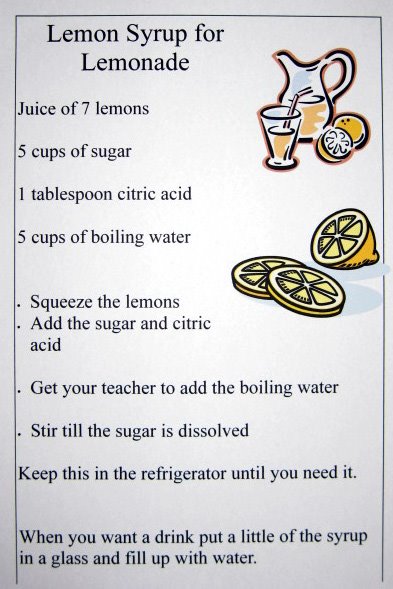
Recipe for Lemon Syrup

This is a great activity for Discovery Time and perfect for this time of the year when there are so many lemons around.


The recipe makes enough syrup for the whole class to have a drink.

It provides a perfect opportunity for encouraging participation / collaboration and oral language (essential skills / key competencies).


The activity can be extended by:
  • Setting up a drink stall - with cash register and play money. Children design a sign and decide on a price.
  • Setting up a cafe - children organise the table, waiting staff (with pad & pen), money, kitchen staff for washing up etc.

Sunday, July 16, 2006

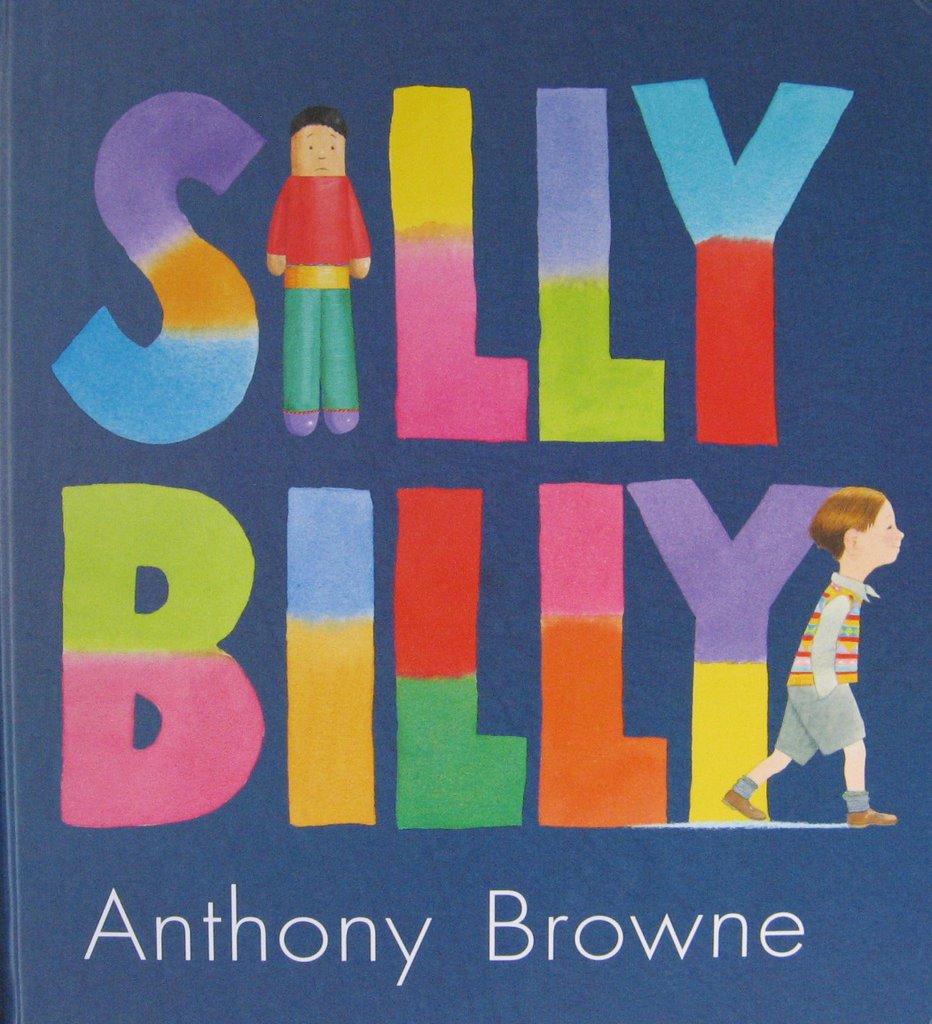
"Silly Billy" - Anthony Browne's lastest book is fabulous.

'Billy was a worrier - he worried about everything, until his Grandma introduced him to worry dolls...'

Here's a wonderful response to this story from a yr 1&2 class. The teacher read the story to the class and then included the activity in Discovery Time the next day. She set up a table with wooden pegs (from the $2 shop), PVA glue and scraps of fabric/wool and the children set to with very little adult assistance.

These are some of the worry dolls they made.

Tuesday, June 20, 2006

Matariki -

The latest 'Starters & Strategies' magazine (http://www.teachingonline.org), dropped onto my desk this week, this is what they have to say about Matariki.

Tell students that Matariki, the name given to the Maori new year, refers to a cluster of stars that are seen just before dawn, slightly north of the easterly horizon during late may / early June. The celebration of Matariki begins when the first new moon appears after the star cluster becomes visible. This year it is 27th June.

  • If the stars in the cluster are clear and bright, then it is thought that the year ahead will be warm and productive.
  • If the stars in the cluster are hazy and shimmering, a cold winter is ahead and we must prepare for this.

The nearest star of Matariki is 440 light years away from earth. Light travels at just under 300,000 kilometres per second. Can students suggest a method of how to calculate this distance? Can they do it?

Here are some web sites that the magazine suggests:

www.tepapa.govt.nz

www.matariki.net.nz

Kites are a special part of Matariki celebrations so you may want to make kites during Discovery Time.

I've search a number of sites and these two seem to be the best. Be warned though, I haven't tried them... yet!!! I'll report back next week.

http://www.xs4all.nl/~pdj/birdkite.htm This gives good simple instructions for making a bird kite out of plastic.

http://www.aloha.net/~bigwind/20kidskites.html This is a very simple kite using paper and shish kabab sticks.

Make sure you hunt out 'Starters & Strategies' in your schools. there are lots of ideas for Matariki.

Thursday, June 08, 2006

Matariki

For those of you who are not inspired by football... what about some ideas or resources around Matariki?
Football World Cup

When I set up this blog I thought that it would be interactive. That people would add information and ideas through the comments function. This hasn't happened!!!!!

So how about it!
Over the next few weeks some children will be following the World Cup, so how about letting us know how you are going to incorporate this into Discovery Time. Maybe developing soccer skills, designing jerseys for a New Zealand team or perhaps exploring food from Germany. I'm sure there are some good websites out there that children could explore too.

So how about sharing your ideas. Just click on the comment icon and leave an anonymous message (if you make it anonymous you don't need to log on or get involved in passwords). Give it a go, we'd love to hear from you.

Monday, May 29, 2006

Equipment specials from Every Educaid .
If you are looking at buying equipment for Discovery Time the latest brochure from Every Educaid has some great specials. Open ended equipment gives best value for money and I have found that the following sets work really well.
Gears! Gears! Gears! - Wacky Factory
Breakfast set
Train set (I have bought the black one and found it excellent - very tough and durable)
I would consider these to be part of the 'basic' equipment for Discovery Time.

Sunday, May 28, 2006

More Procedural Texts - A wonderful resource for teachers.
This is not a definitive list, just a selection that we have purchased for schools because we feel they provide great ideas for Discovery Time.

From Horowitz publishing
Hamburger
Let's make pancakes
Magic tricks
Making a picture
Making a torch
Making bread
Making butter
Making dips
Making music
Making spaghetti
Milk shake
Shadow puppets
The school news
Treasure hunt

From Nelson Price Milburn publishers
Bees in the garden
Dinosaur
Growing peas
Ladybird ladybird
Making a bird
Making a cat & mouse
Making a rabbit
Making a toy house
Making breakfast
Making lunch
Making party food
My noodle necklace
Our butterflies

Thursday, May 18, 2006


Focus on Photos

I visited a year one class at Windley School and saw an amazing Discovery Time with a focus on photography. It had began with the teacher taking photos of each student and then progressed into:
making their own cameras
constructing photo frames
setting up a photo shop

There were of course other DT activities going on at the same time but these three activities provided a focus.

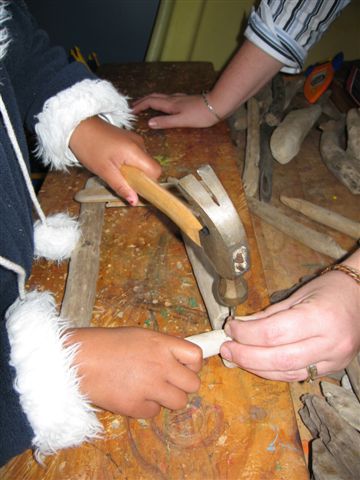
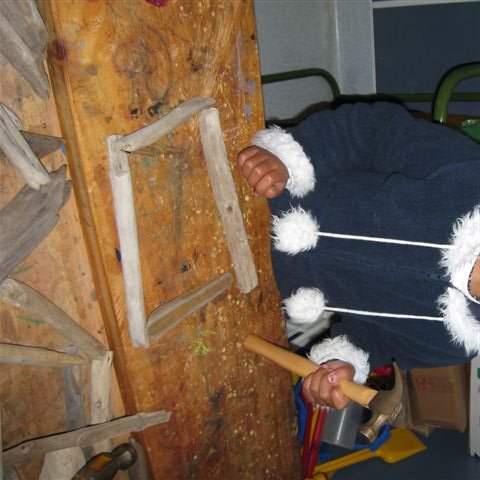
The photo frames - made out of driftwood involved some good carpentry skills and the children soon discovered that some pieces were softer than others - lots of great vocabulary extension work going on around the table.

The photo shop was a great opportunity for role play. The children took photos and then marched off to the shop to have them printed and of course to pay. Again lots of oral language opportunities.

These activities continued over several Friday sessions. They were hugely successful, yet quite simple to organise.